When Should You Replace Your Motorcycle Brake Shoes? 8 Signs to Watch For
Brake shoes are an important part of a motorcycle’s braking system, especially on bikes and scooters equipped with rear drum brakes. Every time you apply the brake, the brake shoes press against the inner surface of the brake drum to create friction and slow the wheel.
Like other friction components, brake shoes gradually wear with use. But brake shoe life is not the same for every motorcycle. Riding style, traffic conditions, braking frequency, road conditions, vehicle load and the quality of the brake components can all affect how quickly they wear.
So, how do you know when it is time to replace your bike’s brake shoes?
The answer is not simply based on kilometres. Changes in braking performance and the physical condition of the brake shoes are much more important indicators.
What Are Motorcycle Brake Shoes and How Do They Work?
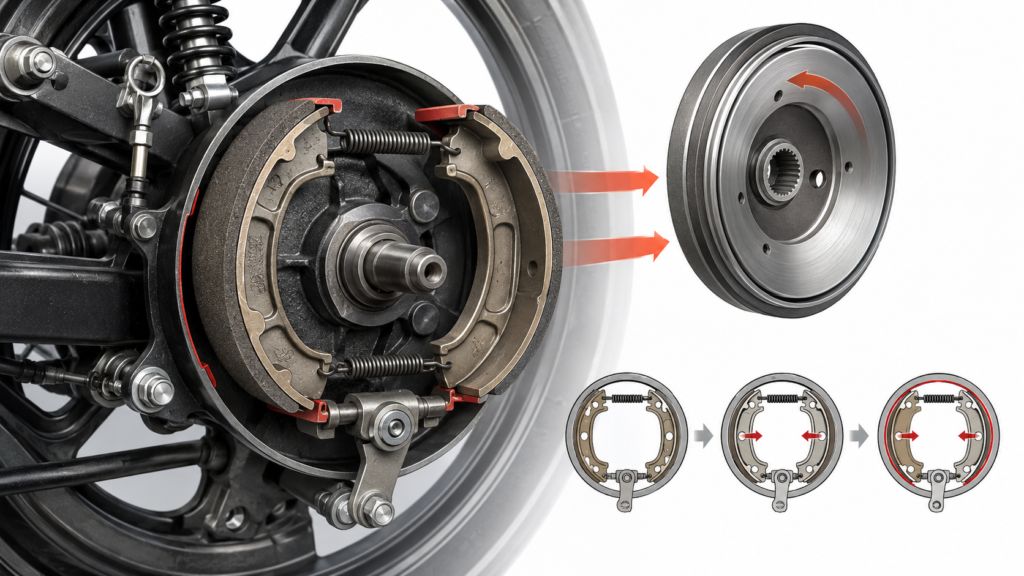
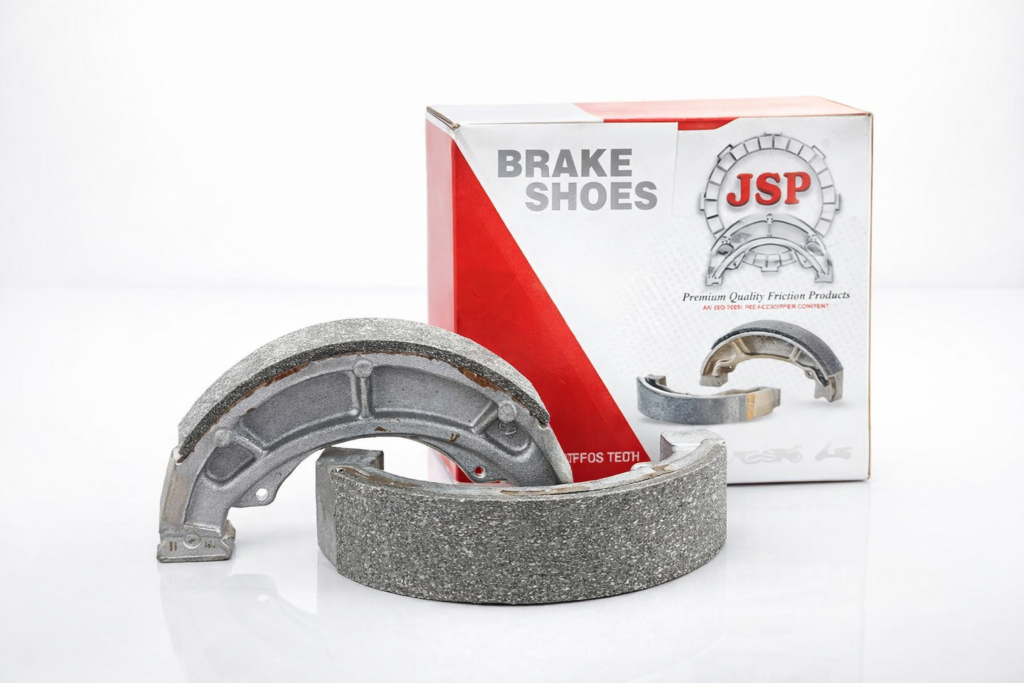
Motorcycle brake shoes are curved metal components fitted with friction material on their outer surface. They are commonly used in drum brake systems, particularly on the rear wheel of many motorcycles and scooters.
When the rider applies the brake, the brake mechanism pushes the brake shoes outward. The friction lining on the shoes then makes contact with the inside surface of the rotating brake drum.
This friction converts the motorcycle’s kinetic energy into heat and reduces the speed of the wheel.
In simple terms:
Brake input → Brake shoes move outward → Friction lining contacts the drum → Friction produces braking force → Motorcycle slows down
Because the brake shoe and brake drum work together as a friction pair, the condition of both components is important for consistent braking performance.
8 Signs Your Bike Brake Shoes Need Inspection or Replacement
Brake shoe wear does not always happen suddenly. In many cases, your motorcycle will give you warning signs that the braking system needs attention.
1. Reduced Braking Performance
If your motorcycle does not slow down as effectively as it used to, the brake shoes should be inspected.
You may notice that you need to apply more force to the brake pedal or that the braking response feels weaker than normal.
Reduced braking can have several causes, including worn friction material, glazing, contamination, incorrect adjustment, brake drum wear or other mechanical problems. Therefore, the complete braking system should be checked.
2. Increased Stopping Distance
If your motorcycle requires noticeably more distance to slow down or stop under similar riding conditions, do not ignore the change.
Stopping distance is affected by speed, tyres, road surface, rider reaction and braking force. However, a noticeable deterioration in braking performance can indicate that the brake system requires inspection.
3. Unusual Noise While Braking
Squeaking, squealing, grinding or other unusual sounds can be a warning that something in the braking system needs attention.
Brake noise can be related to friction-material characteristics, dust, glazing, drum condition, installation or wear.
A noise does not automatically mean that the brake shoes need replacement, but new or persistent noise should be investigated.
4. Brake Pedal Feels Different
If the rear brake pedal travels farther than usual before the motorcycle starts slowing down, the brake system should be inspected.
Excessive pedal travel can be related to brake shoe wear, adjustment or other mechanical issues.
Simply tightening the brake adjustment repeatedly is not a substitute for replacing brake shoes that have reached their service limit.
5. Braking Becomes Weaker After Repeated Use
Repeated braking generates heat. Under high thermal conditions, the friction behaviour of the brake components can change.
If braking becomes noticeably weaker after repeated braking, particularly during heavy traffic, downhill riding or other demanding conditions, the brake system should be inspected.
6. Uneven Braking
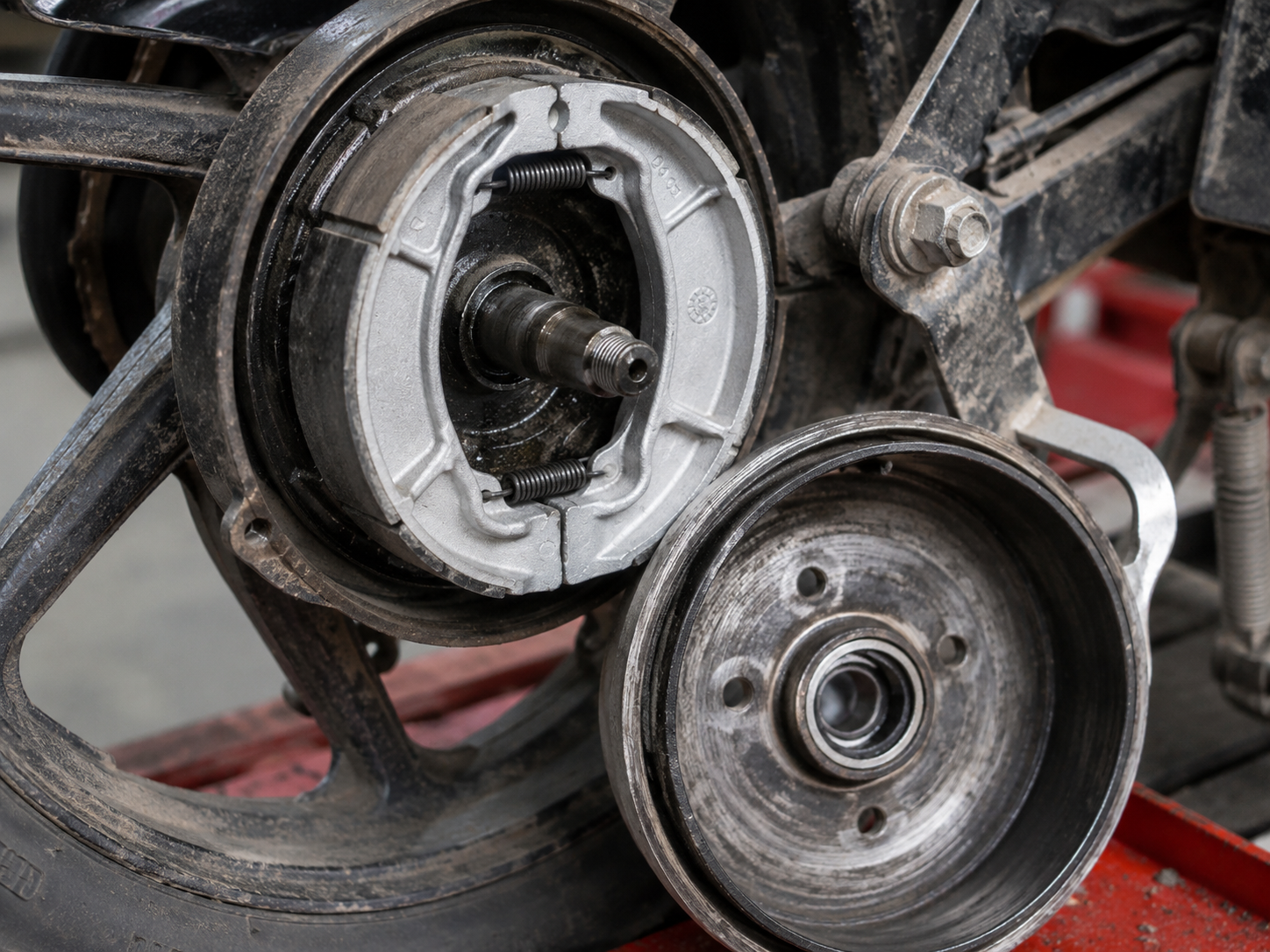
If the brake feels inconsistent or the braking response changes from one application to another, the brake assembly should be checked.
Uneven brake shoe wear, contamination, drum surface irregularities, incorrect adjustment or mechanical problems can all affect brake performance.
7. Visible Wear of the Friction Material
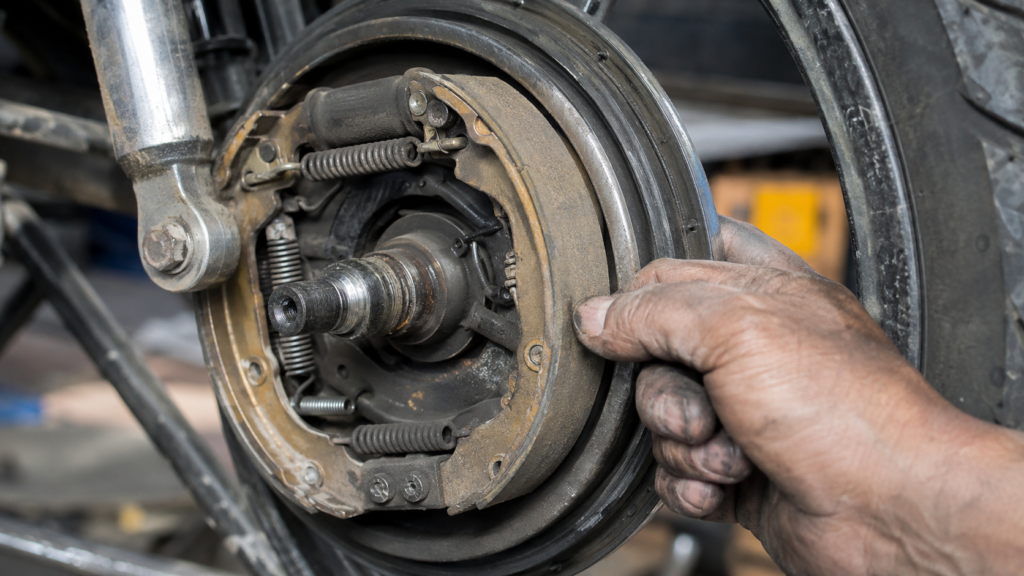
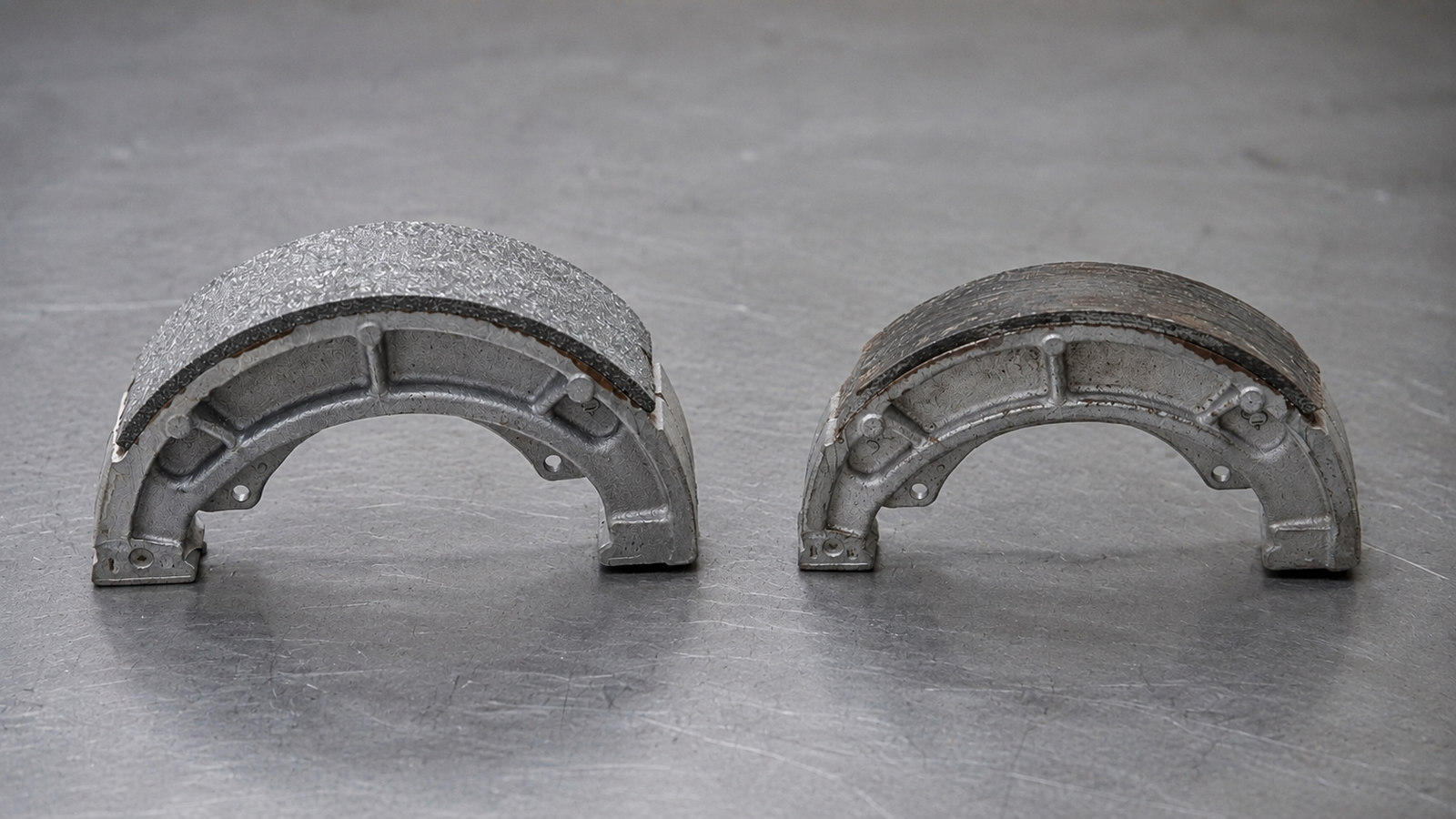
During servicing, the remaining friction material should be inspected.
As the brake shoe wears, the friction lining becomes thinner. However, there is no single universal thickness limit for every motorcycle. The correct replacement limit should be based on the motorcycle manufacturer’s specifications and the particular brake shoe design.
8. Glazing, Cracking or Contamination
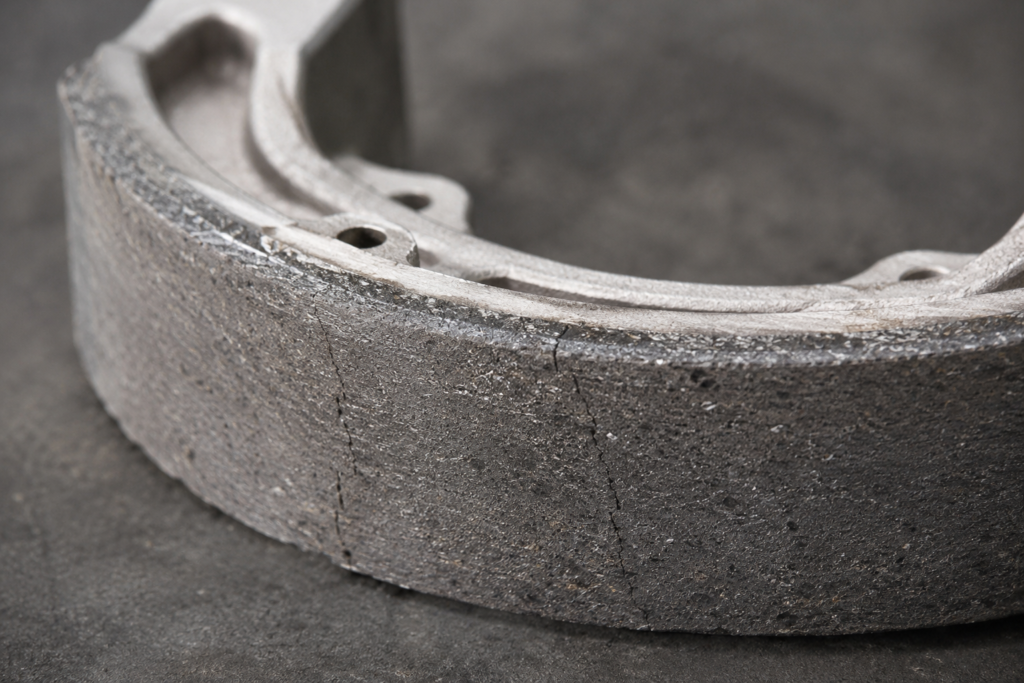
Sometimes a brake shoe may still have sufficient material but its friction surface may no longer be in good condition.
Look for:
- Glazing: An unusually smooth or shiny friction surface
- Cracking: Visible cracks or damage in the friction material
- Contamination: Oil, grease or other substances on the lining
- Uneven wear: Friction material worn differently across the shoe
These conditions should be inspected by a qualified mechanic before continued use.
How to Check Motorcycle Brake Shoe Wear
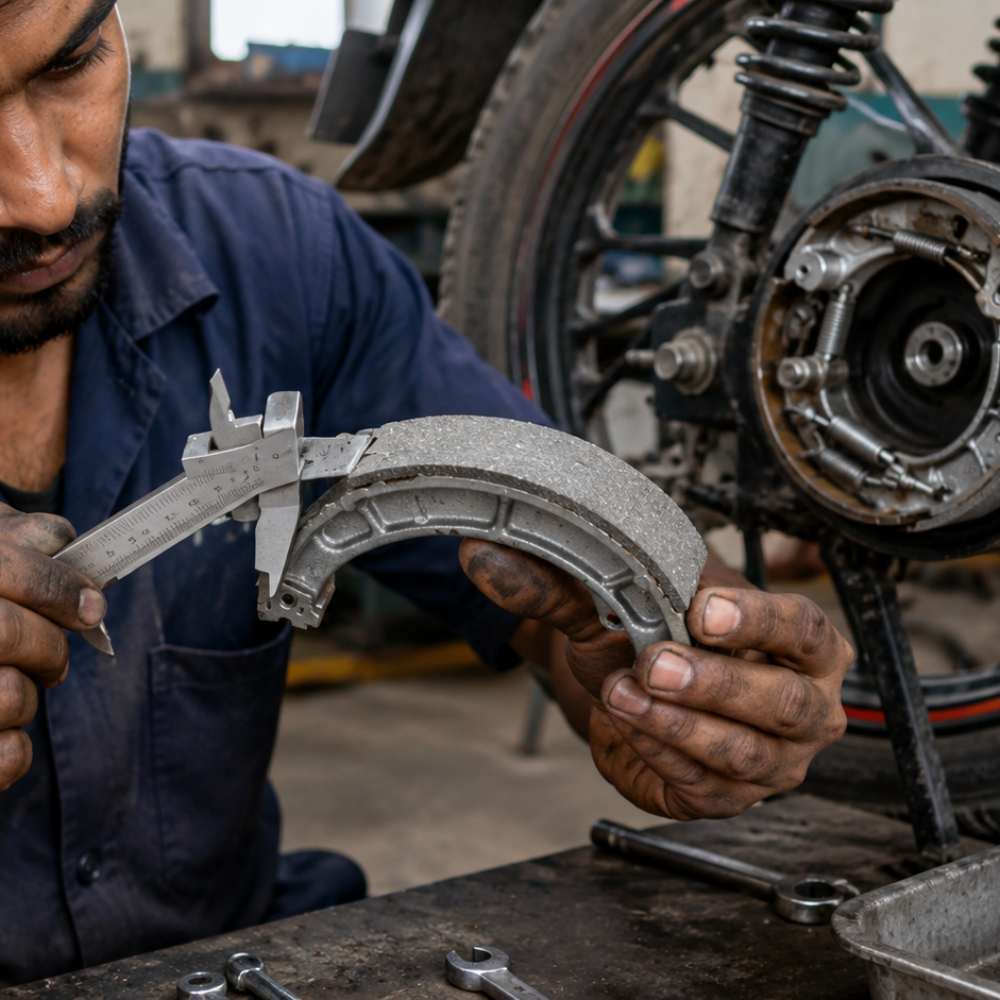
Brake shoe inspection is best carried out during routine servicing or whenever you notice a change in braking performance.
A mechanic should inspect:
- Remaining friction-material thickness
- Cracks or damage
- Glazing
- Uneven wear
- Oil or grease contamination
- Brake shoe condition
- Brake drum surface
- Brake mechanism and adjustment
It is important to inspect the brake drum as well. Installing new brake shoes without checking the drum may not solve an underlying braking problem.
How Long Do Motorcycle Brake Shoes Last?
There is no fixed kilometre interval that applies to every motorcycle.
Brake shoe life depends on how and where the motorcycle is used.
For example, a motorcycle used mainly in heavy city traffic may experience considerably more braking cycles than one used primarily for longer highway journeys.
Brake shoe life can be affected by:
- Riding style
- Traffic conditions
- Frequency of braking
- Road gradients
- Motorcycle load
- Brake adjustment
- Brake drum condition
- Friction-material formulation
- Component quality
- Maintenance
For this reason, periodic inspection is more reliable than replacing brake shoes only after a fixed number of kilometres.
What Causes Brake Shoes to Wear Faster?
Brake shoe wear depends on more than the distance a motorcycle travels. Riding conditions, braking habits, vehicle load and the condition of the brake system can all affect how quickly the friction material wears.
Common factors that can increase brake shoe wear include:
Heavy stop-and-go city traffic
Frequent or aggressive braking
Riding with heavy loads
Hilly or steep roads
Incorrect brake adjustment
A worn or damaged brake drum
Incorrect brake shoe fitment
Oil, grease or other contamination
Poor maintenance
For example, a motorcycle used every day in congested traffic may go through many more braking cycles than one used mainly for open-road riding. Regular inspection helps identify excessive wear before it becomes a larger braking problem.
Can You Continue Riding With Worn Brake Shoes?
If the brake shoes are excessively worn, cracked, badly glazed, contaminated or otherwise damaged, they should not simply be kept in service.
Brakes are a safety-critical part of a motorcycle. If you notice a significant reduction in braking performance or any unusual behaviour, have the braking system inspected by a qualified mechanic as soon as possible.
Timely replacement can help maintain predictable braking performance and prevent worn components from affecting other parts of the braking system.
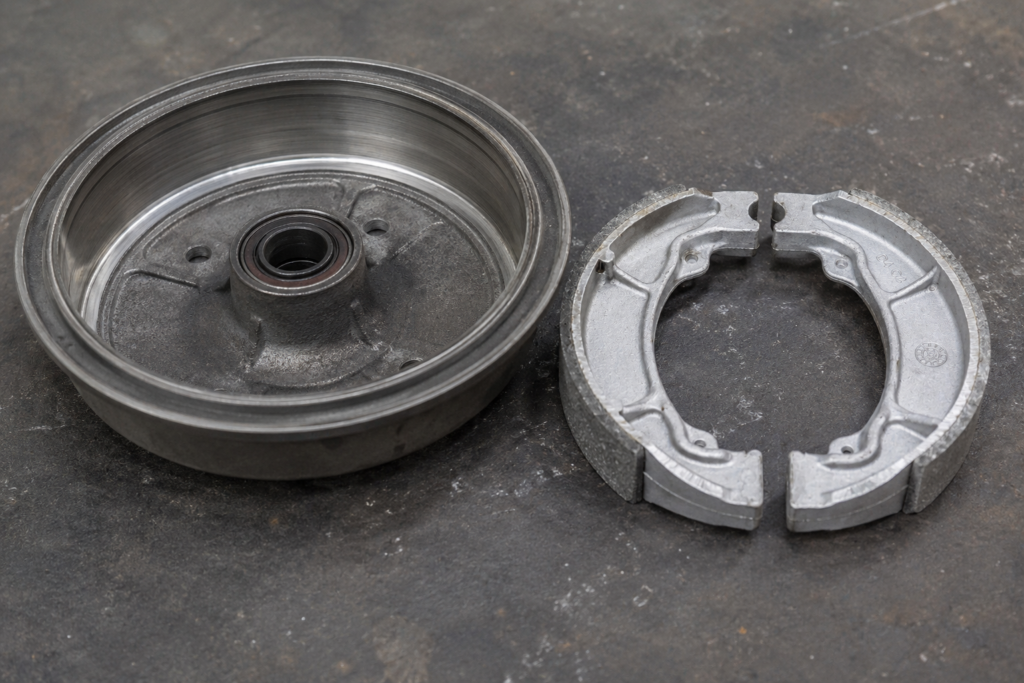
Brake Shoe and Brake Drum: Why Both Matter
Brake shoes and the brake drum work together as a friction pair.
The friction lining contacts the inner surface of the drum every time the brake is applied. Over time, the drum can also develop wear, grooves, scoring or other surface irregularities.
Therefore, when replacing significantly worn brake shoes, the brake drum should also be inspected.
A new brake shoe cannot always compensate for a brake drum that is excessively worn or damaged.
How to Choose the Correct Replacement Brake Shoes
When replacing brake shoes, choosing the correct application is essential.
Two brake shoes can look almost identical but have differences in dimensions, curvature, mounting points, friction lining and operating geometry.
Before purchasing, check:
- Motorcycle make and model
- Model year or variant
- Correct part number
- Brake shoe dimensions
- Brake shoe shape and mounting arrangement
- Manufacturer or seller information
Do not select a brake shoe simply because it looks similar to the original component.
The correct brake shoe should be specifically compatible with your motorcycle’s braking system.
What Makes a Good Motorcycle Brake Shoe?
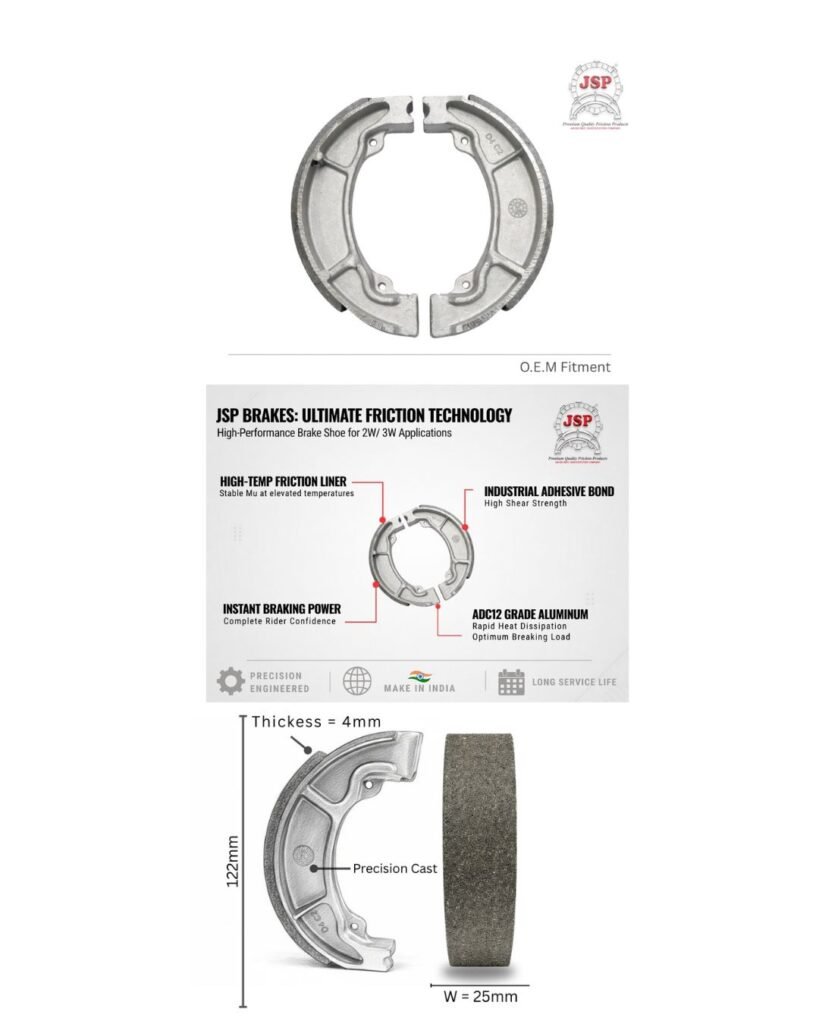
A good motorcycle brake shoe is more than a component that simply fits inside the brake drum. The friction material, dimensions, fitment and manufacturing quality all contribute to how the brake system performs.
When evaluating a replacement brake shoe, consider:
Friction material quality: The lining should be suitable for the intended application and provide consistent friction.
Correct fitment: The shoe should match the motorcycle’s brake system in size, shape and mounting arrangement.
Heat resistance: The friction material should be designed to maintain suitable performance under the operating conditions of the application.
Consistent friction performance: Consistency from one braking application to another is important for predictable braking.
Drum compatibility: The shoe should be correctly matched to the brake drum and application.
Manufacturing quality: Accurate dimensions, proper bonding and controlled production processes help support reliable fitment and performance.
Quality inspection: Appropriate inspection and testing help identify manufacturing or dimensional issues before the product reaches the customer.
For this reason, choosing a replacement brake shoe should involve more than selecting the cheapest or most visually similar option.
JSP Brakes: Manufacturing Brake Components for Two-Wheelers
For a brake component manufacturer, consistent fitment and controlled manufacturing are important parts of product quality. JSP Brakes manufactures brake shoes and other friction components for two-wheelers and three-wheelers, with a focus on dimensional accuracy, friction-material performance and quality control.
JSP’s manufacturing and quality processes include material preparation, machining and finishing, assembly checks and product testing. The company’s quality information also highlights testing related to friction performance, wear, thermal stability and dimensional accuracy.
If you are looking for replacement brake shoes, you can explore JSP Brakes’ range of 2 & 3 wheeler brake shoes and check the correct application for your vehicle.
Common Mistakes When Replacing Brake Shoes
Some common mistakes can reduce the effectiveness of new brake shoes.
Choosing the wrong application
A visually similar brake shoe may not be designed for your motorcycle.
Ignoring the brake drum
A worn or damaged drum can affect the performance of new shoes.
Allowing oil or grease on the friction surface
Contamination can significantly affect friction performance.
Incorrect installation
Brake shoes, springs and other components should be installed correctly according to the appropriate service procedure.
Ignoring bedding-in
New friction components may require a suitable bedding-in period before achieving their normal contact condition.
Maintenance Tips for Better Brake Performance
Regular maintenance can help keep your motorcycle’s braking system working properly.
- Inspect brake components periodically.
- Check brake adjustment during servicing.
- Avoid unnecessary aggressive braking.
- Keep friction surfaces free from oil and grease.
- Inspect the brake drum when replacing brake shoes.
- Replace damaged or excessively worn friction components.
- Pay attention to changes in brake feel or performance.
Remember, good maintenance does not stop normal wear, but it can help ensure that the brake system wears and operates as intended.
Frequently Asked Questions
How often should motorcycle brake shoes be replaced?
There is no universal replacement interval. Brake shoe life depends on riding conditions, braking frequency, motorcycle usage, friction material and maintenance. Regular inspection is more useful than relying only on mileage.
How do I know if my rear brake shoes are worn?
Common signs include reduced braking performance, increased pedal travel, unusual noise, uneven braking and visible wear or damage to the friction lining.
Can worn brake shoes damage the brake drum?
Excessive wear or abnormal contact can affect the brake drum. The drum should therefore be inspected when significantly worn brake shoes are replaced.
Why are my new brake shoes not giving good braking?
Possible causes include incorrect fitment, installation problems, contaminated friction surfaces, brake drum condition, adjustment or bedding-in. The complete brake assembly should be inspected.
Do new brake shoes need bedding-in?
New brake shoes may require a suitable bedding-in period to establish proper contact between the friction lining and brake drum. Follow the applicable manufacturer’s recommendations.
How often should I inspect my bike brake shoes?
Inspection frequency depends on the motorcycle, riding conditions and the manufacturer’s maintenance recommendations. Bikes used frequently in heavy traffic or demanding conditions may require more frequent checks.
How do I choose the right brake shoe for my motorcycle?
Check the motorcycle make, model, variant, applicable part number and brake shoe dimensions. Always confirm that the replacement is specifically designed for your motorcycle’s braking system.
Can the brake drum affect new brake shoes?
Yes. A worn, scored or damaged brake drum can affect how new brake shoes contact the drum. The drum should therefore be inspected whenever significantly worn brake shoes are replaced.
Final Tip
Your motorcycle’s brake shoes may be small components, but they play an important role in safe and predictable braking.
There is no single mileage at which every motorcycle brake shoe needs to be replaced. Instead, pay attention to changes in braking performance, brake feel, unusual noise and the physical condition of the friction material.
If you notice reduced braking, excessive pedal travel, unusual noise, uneven braking or visible damage to the brake lining, have the brake system inspected by a qualified mechanic.
And when replacement is required, always choose a brake shoe that is correctly matched to your motorcycle’s make, model, variant and braking system.
Looking for the Right Brake Shoes?
Choosing the correct brake shoe is an important part of maintaining your two-wheeler’s braking system. JSP Brakes manufactures brake components for two-wheelers and three-wheelers, with a focus on fitment, manufacturing quality and friction performance.
Before purchasing a replacement brake shoe, verify the correct application and part compatibility for your motorcycle or scooter.